Uniform Coverage That Actually Meets R-Values
Blown Fiberglass Insulation in Albion for attics with inadequate insulation and uneven heating costs
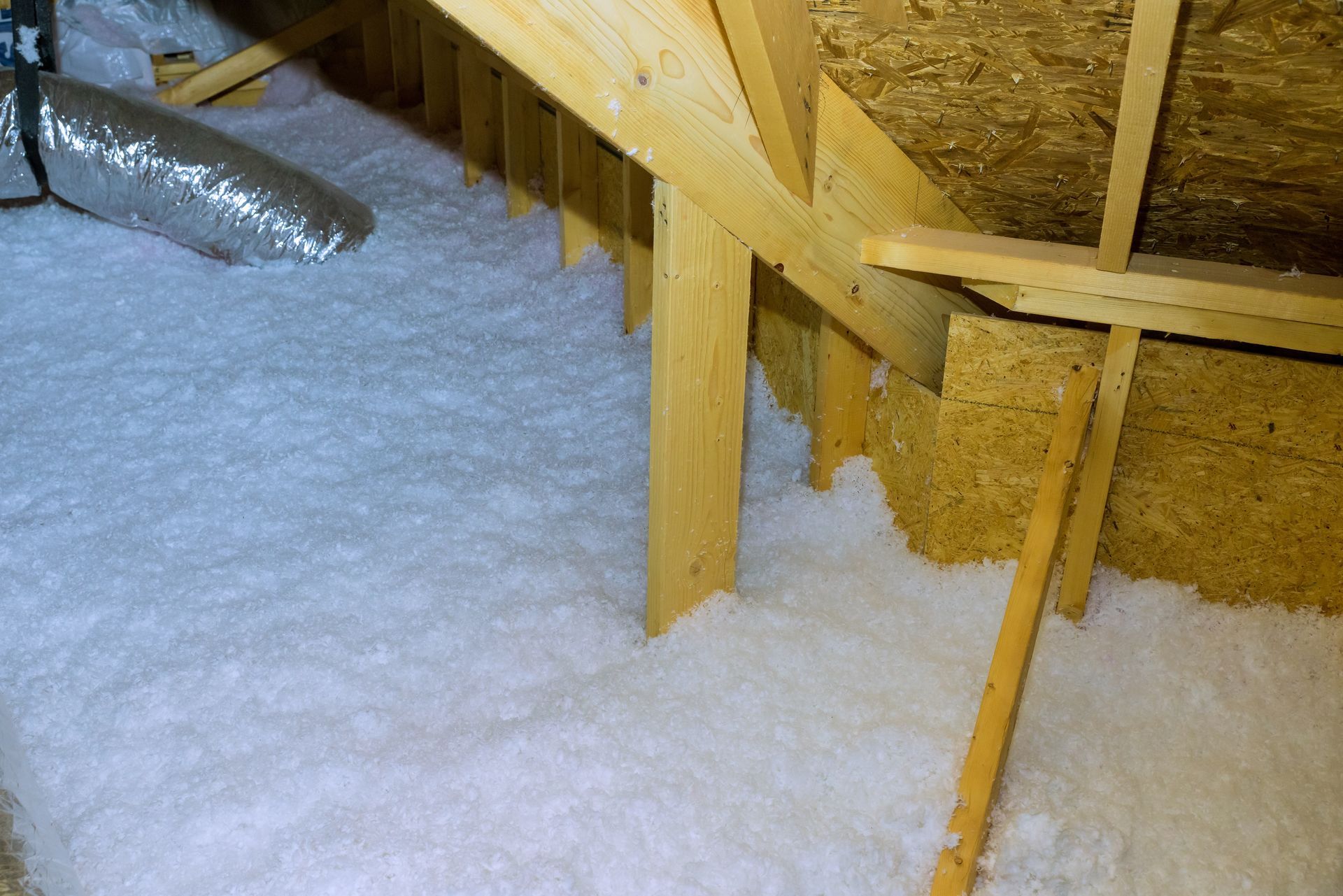
Attics across eastern Nebraska often contain hand-laid batts that leave gaps around joists, create compressed areas, and settle over time into uneven layers that fail to protect your home. BKE Insulators installs blown fiberglass insulation using professional equipment that achieves consistent depth and density throughout the attic space, filling irregular joist bays and covering obstructions that batts cannot accommodate. This machine-blown application delivers uniform R-values that remain constant across the entire attic floor, eliminating the cold spots and heat loss patterns that occur with improperly installed batt insulation.
The blowing machine meters fiberglass material at controlled rates through a hose, allowing the installer to fill attic areas to precise depths that correspond to your target R-value. Where batts require cutting, fitting, and compression around obstacles, blown fiberglass flows around plumbing vents, electrical boxes, and truss members to maintain consistent coverage. This method proves particularly effective for retrofit applications where attic access allows cost-effective upgrades without disturbing finished ceilings or living spaces.
Arrange an attic inspection to measure your current insulation depth and identify areas where coverage falls short of code requirements.
Why Machine Application Outperforms Hand-Laid Batts
The installation process begins with preparing the attic space by clearing stored items and identifying areas that need additional air sealing before insulation application. Professional installation equipment maintains consistent material density as the fiberglass fills each joist bay to the specified depth, with depth markers placed throughout the attic to verify uniform coverage. The blown application naturally fills irregular spaces and covers existing batts that have settled or degraded over time.
Once installation completes, you notice that ceiling temperatures equalize across all rooms, reducing the temperature differences that previously made some bedrooms uncomfortable. Your heating system runs for shorter cycles because heat no longer escapes rapidly through thin or missing insulation areas. Cold spots on ceilings disappear, and ice dam formation along roof edges decreases because attic temperatures remain closer to outdoor temperatures rather than melting snow through heat loss.
The blown method allows precise R-value targeting by adjusting application depth—each inch adds approximately R-3, so an R-49 attic requires roughly sixteen inches of settled depth. This adjustability lets you meet current energy codes or exceed them based on your performance goals and budget. The fiberglass material resists settling better than older products, maintaining installed R-values for decades without requiring topping off or replacement.
Answers to Frequent Attic Insulation Questions
Homeowners considering blown fiberglass often ask about application specifics and long-term performance before scheduling work.
What happens to existing insulation during installation?
The blown fiberglass applies directly over existing batts or loose-fill material that remains in acceptable condition, adding R-value without requiring removal. Severely compressed, water-damaged, or mold-affected insulation gets removed before new material application to prevent ongoing issues.
How does blown fiberglass perform in Albion's temperature extremes?
The material maintains consistent R-value in both summer heat and winter cold because the air trapped between glass fibers provides thermal resistance regardless of outdoor conditions. Unlike some insulation types, fiberglass does not degrade from repeated freeze-thaw cycles or sustained high temperatures in attic spaces.
Why does blown fiberglass cost less than spray foam?
The material itself costs significantly less to manufacture, and application requires simpler equipment without the chemical mixing and curing processes that spray foam demands. This makes blown fiberglass the most cost-effective option for attic spaces where air sealing has already been addressed or can be completed separately.
When should attic insulation be upgraded?
Visible ceiling joists indicate insufficient coverage, and utility bills that spike during temperature extremes suggest heat loss that additional insulation would reduce. Most homes built before 2000 have insulation levels below current code requirements, making them candidates for cost-effective upgrades that pay back through lower heating and cooling costs.
What ventilation requirements apply after adding insulation?
Attic ventilation must maintain proper airflow to prevent moisture accumulation and extend roof life, so installation includes maintaining clearances at soffits where outside air enters. BKE Insulators installs baffles between rafters when needed to preserve ventilation paths while achieving target R-values across the attic floor.
The installation typically completes in a single day for standard residential attics, with immediate performance benefits. Contact BKE Insulators to discuss your current attic conditions and determine the insulation depth that matches your energy goals.