Air Sealing That Stops Energy Loss
Spray Foam Insulation in Albion for homes facing extreme temperature swings and high utility bills
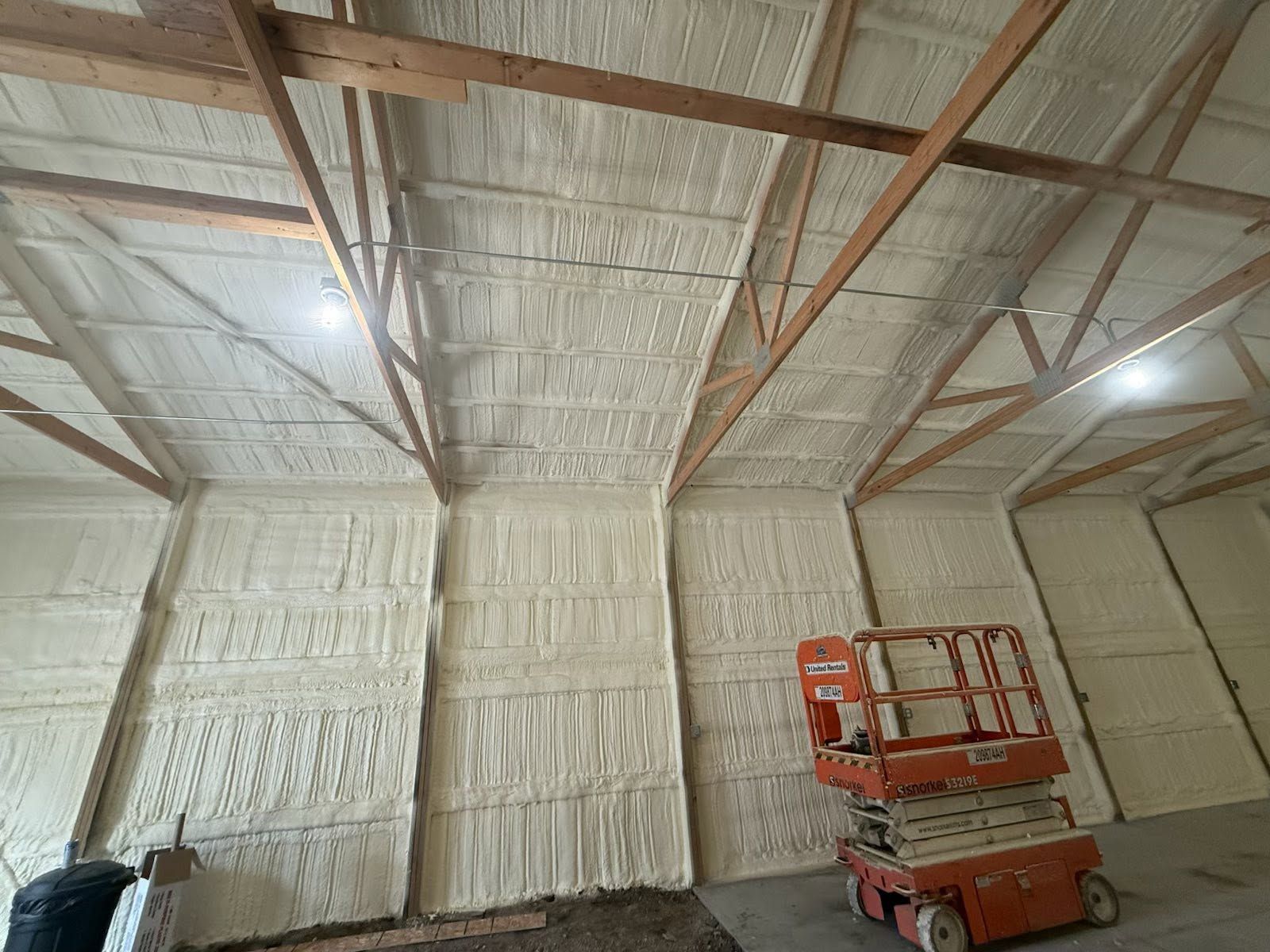
BKE Insulators installs spray foam insulation across eastern Nebraska as a complete air barrier system that addresses both thermal resistance and air leakage in a single application. When your heating system runs constantly during January cold snaps or your air conditioner struggles through July heat, the issue often traces back to air movement through wall cavities, rim joists, and attic planes rather than just thin insulation. Spray foam expands to fill gaps that fiberglass batts and blown materials cannot reach, creating a continuous seal that stops conditioned air from escaping and outdoor air from infiltrating.
The application process involves specialized equipment that mixes two liquid components at the spray nozzle, causing immediate expansion that fills irregular spaces and forms a rigid air barrier. Nebraska's temperature extremes—from subzero winter nights to 100-degree summer days—create significant pressure differentials that drive air movement through any available gap in the building envelope. Spray foam stops this air movement at the source while simultaneously providing insulation value that remains consistent regardless of wind or temperature conditions.
Schedule a property evaluation to identify specific areas where air sealing would reduce your heating and cooling costs.
What Changes After Installation Completes
The installation requires preparation of the spray area to protect finished surfaces, followed by the application of foam that expands within seconds and cures to a rigid structure within hours. Licensed and insured contractors use professional-grade equipment that controls mix ratios and application thickness to meet specified R-values for your climate zone. The foam adheres directly to framing members, sheathing, and existing surfaces to create a monolithic barrier that cannot shift or settle over time.
After the foam cures, you notice that temperature differences between rooms disappear, floors above crawl spaces feel warmer in winter, and the furnace or air conditioner cycles less frequently. Rooms that previously felt drafty maintain consistent temperatures, and outdoor noise levels drop noticeably because the air seal also blocks sound transmission. BKE Insulators completes the work with trimmed excess foam and a cleaned work area, leaving you with a permanently sealed building envelope that performs identically in year twenty as it does on installation day.
The system functions as both insulation and air barrier, eliminating the need for separate house wrap, vapor barriers, or additional sealing steps that other insulation types require. This dual function reduces labor time and material costs compared to achieving equivalent performance with multiple products. Open-cell and closed-cell foam options address different applications based on your building's specific requirements and budget constraints.
Questions About Performance and Application
Property owners across eastern Nebraska frequently ask about spray foam performance before committing to this insulation approach.
How does spray foam handle Nebraska's humidity variations?
The closed-cell formulation acts as a vapor barrier that prevents moisture migration through wall and roof assemblies, while open-cell foam allows controlled drying when used with proper vapor management strategies. Both formulations resist mold growth and maintain insulation value regardless of humidity levels.
What preparation does spray foam installation require?
You clear the application area of stored items and cover finished surfaces that need protection from overspray. Electrical and plumbing work must be completed before foam application since access becomes difficult afterward. The installation team handles masking and preparation of adjacent areas to prevent foam adhesion where it is not wanted.
Why does spray foam cost more than blown insulation?
The material itself costs more to manufacture, and application requires specialized equipment that mixes components under pressure at precise ratios. The higher upfront cost reflects superior air sealing performance that blown materials cannot match, resulting in lower energy bills that offset the initial investment over the system's lifetime.
When should spray foam be applied during construction?
New construction allows spray foam application after rough plumbing and electrical installation but before drywall, providing access to all cavities that need sealing. Retrofit applications work in attics, crawl spaces, and rim joists where existing wall cavities remain inaccessible without removing interior finishes.
What thickness achieves adequate R-value for Albion winters?
Closed-cell foam provides approximately R-6 per inch, so a three-inch application delivers R-18 in wall cavities while simultaneously creating an air barrier. Attic applications typically use five to seven inches to meet or exceed code requirements for your climate zone, with exact thickness determined by your building's specific thermal goals.
BKE Insulators uses equipment calibrated for consistent foam density and complete cavity fill throughout your project. Request a detailed estimate based on your building's current insulation gaps and air leakage patterns.