Walls That Stop Heat Loss Without Demolition
Injection Foam (RetroFoam) in Albion for homes with existing wall cavities that leak conditioned air
BKE Insulators installs RetroFoam injection foam insulation into existing wall cavities without removing interior drywall or exterior siding. This process fills the gaps and voids inside walls where fiberglass batts have settled or were never installed, stopping the air movement that drives up heating and cooling costs. Homes with cold exterior walls in winter or rooms that never reach the thermostat setting benefit from this retrofit solution.
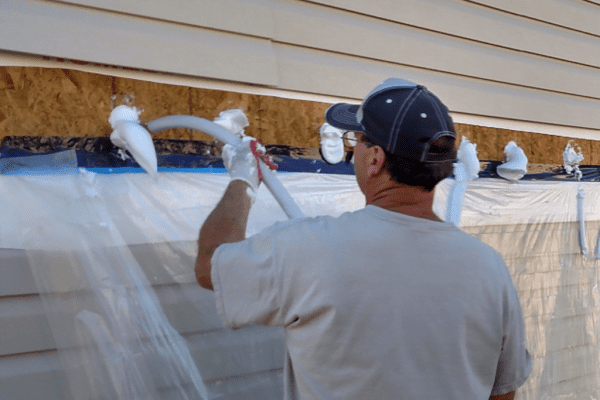
The installation involves drilling small access holes through the exterior siding, injecting the foam into each stud cavity until filled, then plugging and sealing the holes. Unlike spray foam, RetroFoam does not expand after injection, which prevents pressure buildup against siding or drywall and allows precise control during the fill process. The material flows as a liquid and cures into a stable foam that remains in place without settling over time.
Schedule a wall cavity assessment to determine current insulation levels and identify areas where injection foam will address thermal performance gaps.
How Injection Foam Fills Cavities Without Expanding
The injection process uses specialized equipment to pump RetroFoam through small entry points drilled at intervals corresponding to stud spacing. Technicians monitor the fill by watching for foam to appear at the next access hole or by using fill indicators, ensuring complete coverage without overfilling. Because the foam does not expand after injection, the installer controls the exact volume entering each cavity, preventing pressure against building components that expansion-type foams can create.
After the foam cures, you notice that exterior walls feel warmer to the touch during winter months and rooms reach set temperatures more consistently. Cold spots near windows and baseboards diminish as the foam stops air infiltration through wall cavities. BKE Insulators verifies that each cavity is filled by checking for consistent resistance during injection and confirming no voids remain in the wall assembly.
The service works for wood-frame walls with accessible stud cavities, but not for solid masonry construction or walls with horizontal blocking that prevents vertical foam flow. Homes with vinyl, wood, or fiber cement siding accommodate the access holes, which are sealed and matched to the siding profile after installation. The process typically takes one to two days depending on the square footage of exterior walls being filled.
What Homeowners Ask Before Retrofitting Walls
Insulating existing walls raises questions about the installation method, material behavior, and what changes after the work is complete. These answers address the details specific to injection foam application in occupied homes.
What happens to the access holes drilled through siding?
After foam injection, each hole is sealed with a plug that matches the siding material and painted or finished to blend with the surrounding surface, restoring the exterior appearance while maintaining weatherproofing.
How does RetroFoam behave differently than spray foam?
RetroFoam is injected as a liquid and does not expand after application, which prevents pressure buildup inside wall cavities and allows controlled filling without risk of drywall bowing or siding distortion that expanding foams can cause.
Why do some walls feel colder even with fiberglass insulation present?
Fiberglass batts settle over time or were often poorly installed during original construction, leaving gaps at the top of wall cavities and around electrical boxes where air moves freely, reducing the effective insulation value despite the material being present.
When is injection foam the better option compared to removing drywall?
Injection foam makes sense when walls are finished and occupied, avoiding the disruption and cost of interior demolition, especially in homes where the drywall, trim, and paint are in good condition and removing them would require extensive restoration work.
What determines whether walls in Albion homes are good candidates for this service?
Wood-frame construction with hollow stud cavities, accessible exterior siding that can be drilled and sealed, and the absence of dense-packed cellulose or closed-cell spray foam already filling the space are the primary factors that make injection foam a viable retrofit solution.
BKE Insulators evaluates wall construction and current insulation conditions before recommending injection foam, ensuring the approach matches the building assembly and delivers measurable thermal improvement. Contact the team to arrange an inspection and discuss whether your home's wall cavities will benefit from this retrofit insulation method.